
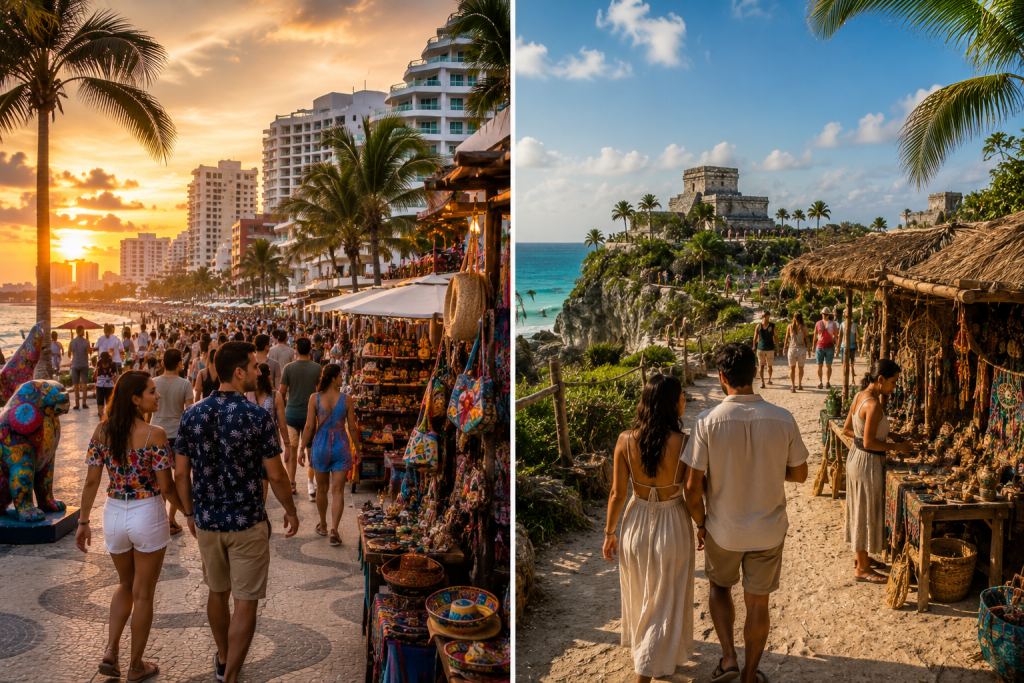
When planning a trip to the Mexican Caribbean, it is incredibly easy to get lost in photos of perfect beaches, luxury hotels, and loungers right by the sea. Most of the time, the final decision comes down to two names that echo everywhere: Cancun and Tulum. At first glance, you might think the only difference between them is the size of the buildings or the room rates, but if you scratch just below the surface and look to connect with the local culture, you will realize they are two completely opposite worlds.
There is a myth that Cancun has no soul and that Tulum is the last bastion of Mayan authenticity. The reality is much more interesting and far less picture-perfect than social media makes it out to be. To truly understand how people live the local culture in each place, you have to step away from the zones designed exclusively for tourism and peek into where the locals actually spend their daily lives.
The urban soul of Cancun versus the polished mysticism of Tulum
Cancun grew out of nowhere in the 1970s, a planned project in the middle of the jungle that has now transformed into a real, vibrant, and complex city of nearly a million inhabitants. That is its great cultural advantage. People from all over Mexico live here, having arrived in search of opportunities: people from Veracruz, Yucatan, Chiapas, and central Mexico. The result is a living melting pot of traditions that you feel the moment you step outside the Hotel Zone.
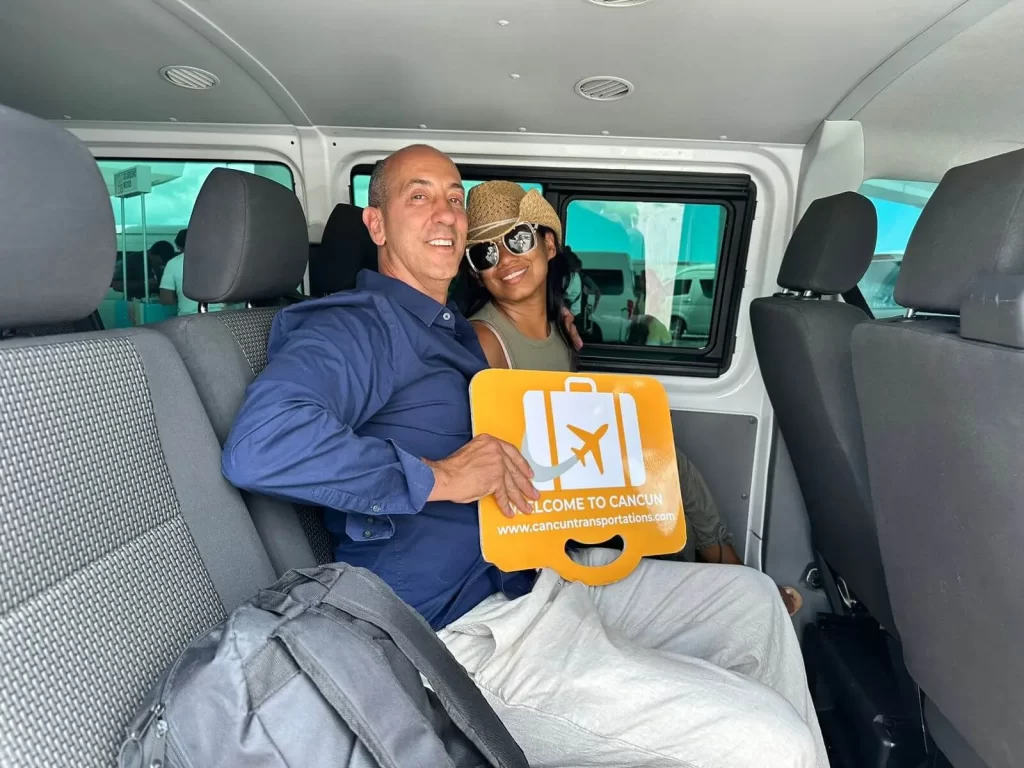
When you step off the plane, the sheer scale of this destination hits you immediately. Because of this, planning your logistics properly is key to avoiding starting your vacation on the wrong foot caught up in airport chaos. Booking a reliable service like Cancun Airport Transportation allows you to forget about the stress of surge pricing or haggling with local taxi drivers right after you arrive. You simply get into an air-conditioned van and watch how the highway divides the coastline from the true, bustling movement of the region.
Tulum, on the other hand, went from being a sleepy fishing village to becoming the epicenter of the global boho-chic movement. Its cultural focus ties deeply into spiritual wellness, temazcal ceremonies, beachfront yoga classes, and an organic aesthetic. However, let’s be honest: entrepreneurs have packaged a huge part of that spiritual atmosphere for international consumption. In the Tulum beach zone, electronic music from European DJs coexists with copal incense and haute cuisine, creating a beautiful experience that sometimes feels closer to a California festival than deep Mexico. The real life of the area has retreated toward Tulum Pueblo, where the stark contrasts between lifelong locals and specialty coffee shops catch your eye on every corner.
The markets and the real food
If you want to gauge the cultural temperature of any place in Mexico, you have to go see where the working people eat. In Cancun, the answer is not in the lagoon-side restaurants featuring fire shows, but in the city’s downtown.
The community heart of Cancun beats loudly at Parque de las Palapas. If you visit on a weekend evening, you will find a purely local spectacle: families strolling around, kids driving little electric carts, live music, and an irresistible aroma of Yucatecan food. This is the place to try real sopes, cazón empanadas, and marquesitas—that crispy rolled crepe dessert filled with Edam cheese that vendors sell from street carts. Just a few minutes from there, Mercado 23 offers a genuine snapshot of daily life, with local butchers, fruit stalls overflowing with mangoes, and medicinal herb vendors. It is loud, it is chaotic, and it is absolutely authentic.
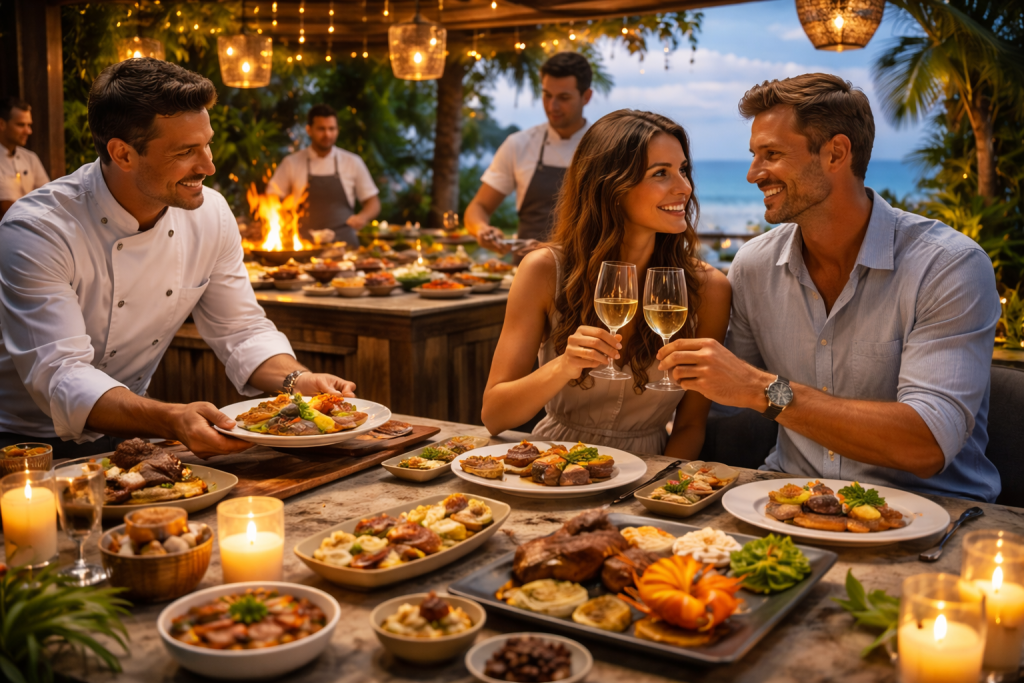
In Tulum, the culinary scene took a very different and highly fascinating route for food lovers. In the beach hotel zone, renowned chefs cook with rustic techniques and open fires right in the middle of the jungle. It is a highly sophisticated interpretation of Mexican food culture, utilizing regional ingredients like melipona bee honey or local chilies, but tailored to global palates. To find everyday flavors in Tulum, you have to walk along the main avenue of the pueblo or wander into the inner streets, where small cochinita pibil stalls and family-run taquerías still resist gentrification and keep their prices affordable.
The presence of Mayan heritage in everyday life
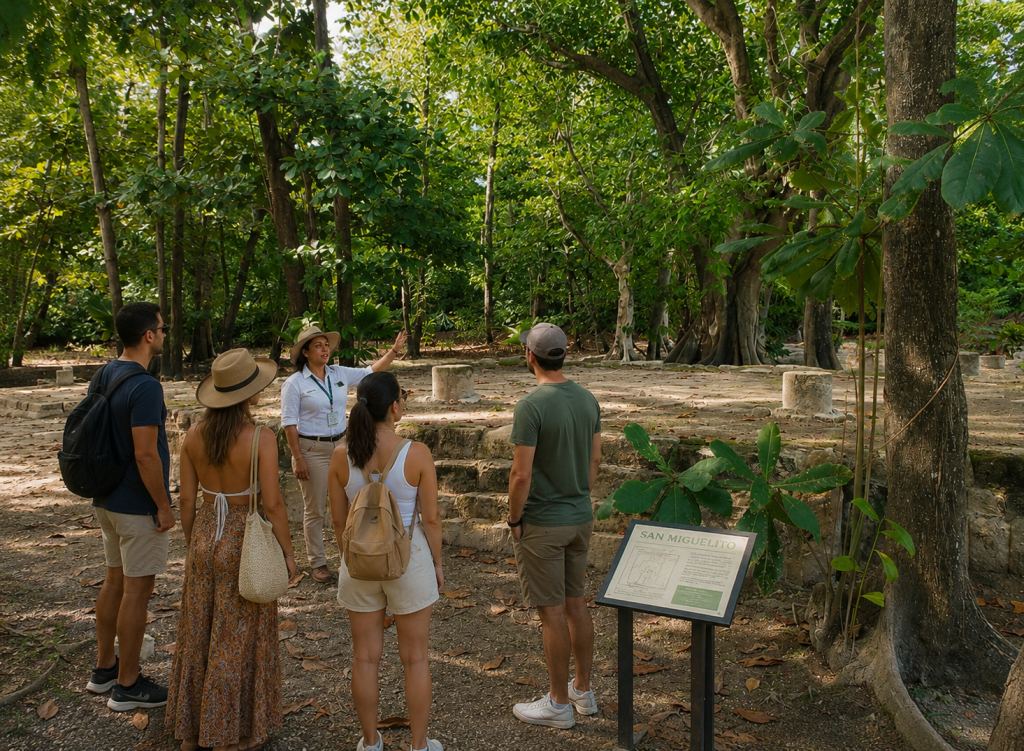
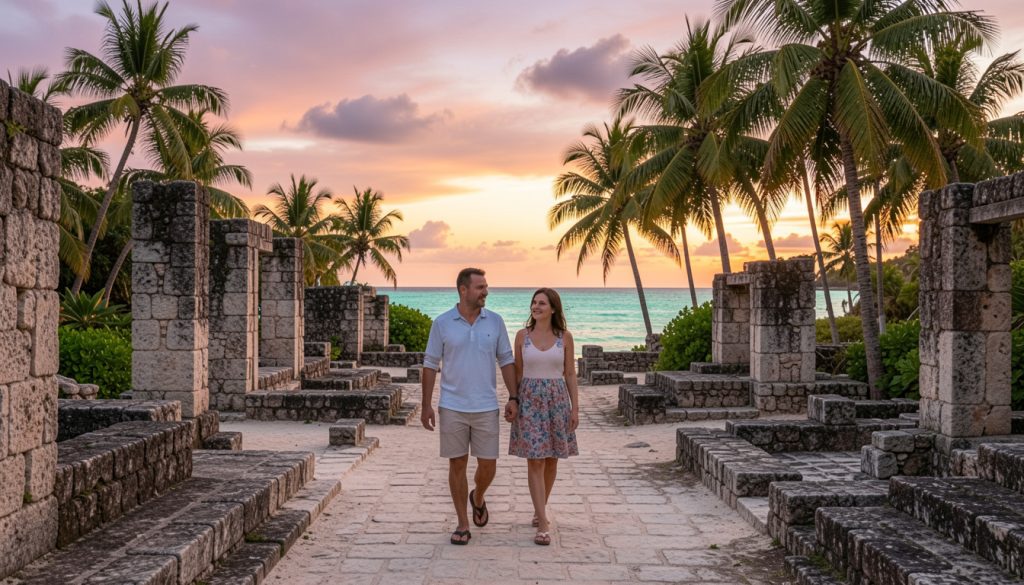
The pre-Hispanic history of this region is immense, but it manifests in very different ways in both destinations. In Cancun, massive hotel complexes slightly overshadow nearby archaeological sites like El Rey or San Miguelito. Even so, the Mayan Museum of Cancun, located right on Kukulcan Boulevard, is an architectural gem that safeguards one of the most important collections of regional artifacts. The fascinating thing about Cancun is that Mayan culture remains alive through its people; the vast majority of those who keep the hotels and restaurants running speak the Mayan language as their mother tongue and commute daily from nearby communities, bringing their worldview into the modern city.
Tulum holds the ultimate visual and geographical advantage. Its archaeological site is one of the most photographed in the world for an obvious reason: the ancient gray stone structures rise impressively over a cliff looking directly out at the turquoise Caribbean Sea. Watching the sunrise there is an experience that instantly connects you to the seafaring past of the Mayas. Furthermore, Tulum sits right at the gateway to the deep Mayan Zone of the state of Quintana Roo. Just a few miles inland, villages like Cobá or Francisco Uh May preserve artisanal traditions and community dynamics that have changed very little over the centuries. Here, you feel mysticism in the earth, in the sacred cenotes hidden deep in the jungle, and in the deep respect inhabitants hold for the natural environment.
The comfort factor and moving between worlds
Deciding which type of culture you prefer to experience also depends heavily on how you like to travel. Cancun features a massive infrastructure where everything runs with very clear urban efficiency. If you stay downtown, getting around on public transit is incredibly cheap and straightforward, making it easy to explore daily life without spending a fortune.
The founders designed Tulum on a much smaller scale, which today creates serious traffic challenges on its single coastal road. Getting around by bicycle is a favorite choice for many, but the distances between the town and the beach are considerable under the midday sun.
Given these distances and the geography of the area, many travelers choose to base themselves in the comfort and connectivity of Cancun, using private transfer services for cultural day trips heading south. Hiring the company Cancun Airport Transportation for a day trip to Tulum or to tour the surrounding cenotes gives you the freedom to venture into the jungle without having to deal with regional public transit or wasting hours waiting for a bus in the tropical heat. It allows you to design an itinerary at your own pace, blending the urban energy of the north with the dense nature of the south.
Two sides of the same Caribbean coin
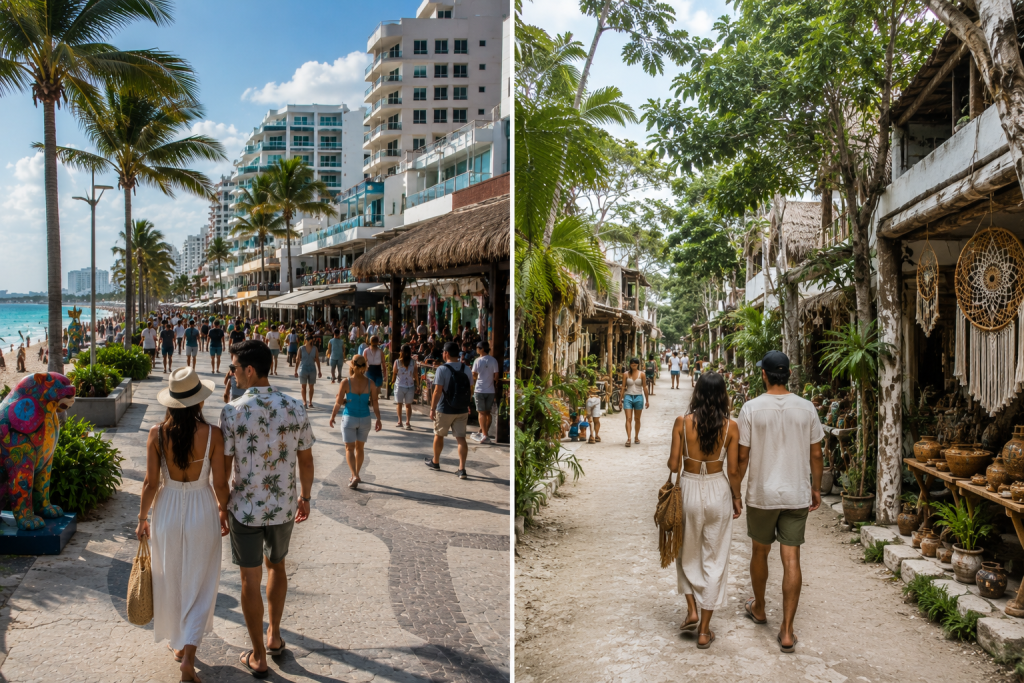
In the end, comparing Cancun to Tulum when it comes to local culture isn’t about picking an absolute winner, but about understanding what kind of traveler you are. Cancun offers you the culture of a modern, living, hard-working, and loud Mexican city, where the mix of identities creates a hyper-realistic and fascinating environment if you dare to cross the resort boundaries. Tulum gifts you a more aesthetic experience, focused on nature, design, and a spirituality that, while sometimes feeling commercial, remains grounded by the undeniable energy of the jungle and Mayan legacy.
If you are looking for popular markets, spectacular street food, and seeing how contemporary Mexico coexists with mass tourism, downtown Cancun will charm you. If you prefer walking barefoot, dining by candlelight with organic ingredients, and exploring ruins right on the ocean’s edge, Tulum will deliver exactly what you want. The best part of the Mexican Caribbean is that you don’t have to limit yourself to just one option; both places are close enough so you can experience the best of both worlds in a single trip.